Lithium prices hit five month lows
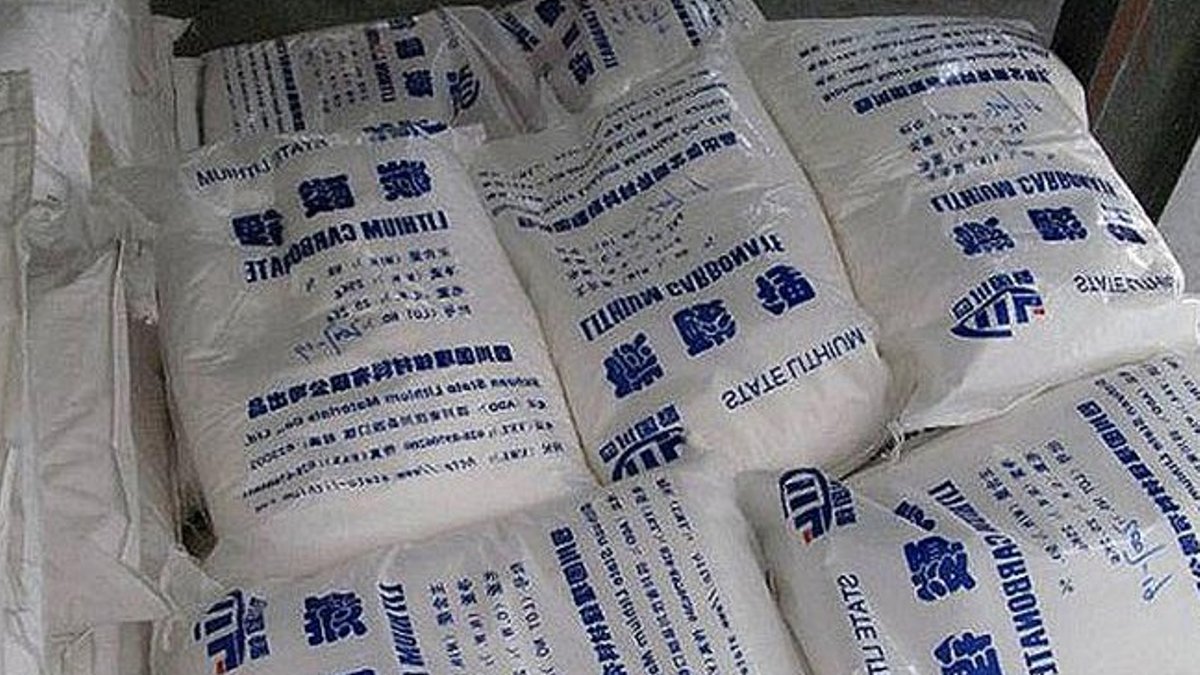
Lithium prices have fallen to a five‑month low, reflecting renewed concerns of oversupply as previously idle mines come back online.
Market dip tied to mine restarts in China and Australia
On Wednesday, the most active lithium carbonate contract on the Guangzhou Futures Exchange (GFEX) settled at 136,800 yuan, about $20,210 per tonne. That price is roughly 30 % below the multi‑year highs seen in mid‑May. The slide follows a series of mine restarts and expansion projects across the two major producing regions.
China’s battery giant Contemporary Amperex Technology Co. (CATL) obtained a safety production permit for its Jianxiawo mine in Yichun. The permit clears the final regulatory hurdle, allowing the operation to resume after a near‑year suspension. When fully ramped, the mine can deliver 100,000 to 150,000 tonnes of lithium carbonate equivalent (LCE) annually, representing about 3 % of global output and up to 10 % of China’s domestic supply.
In Australia, Mineral Resources (MinRes) restarted its Bald Hill mine in May, reversing a November 2024 decision to place the site on care and maintenance. Bald Hill can produce around 165,000 tonnes of spodumene concentrate each year. MinRes also operates the larger Wodgina mine with its partner Albemarle, which has a nameplate capacity between 750,000 and 828,000 tonnes of spodumene concentrate annually.
Related: Pakistan seeks new oil routes amid Hormuz tensions
Further Australian activity includes a joint A$490 million expansion of the Mt Marion mine by MinRes and China’s Ganfeng Lithium, boosting processing capacity from 500,000 to 600,000 tonnes of spodumene per year. Core Lithium also resumed operations at its Finniss Lithium Operation after a two‑year pause, aiming for a steady 214,000 tonnes per annum of spodumene concentrate by mid‑2028.
Supply outlook and demand pressures
Global lithium production is projected to rise 26 % year‑over‑year to 2.16 million tonnes in 2026, then 27 % to 2.74 million tonnes in 2027. The upward trend continues, reaching 3.34 million tonnes in 2028 and 4.02 million tonnes in 2029.
Analysts note a price disconnect: futures traders are betting on a surplus despite strong near‑term demand from electric‑vehicle (EV) sales and grid‑scale storage. EV sales are expected to hit 23–24 million units this year, accounting for more than 70 % of total battery deployment. Electric cars now make up nearly 30 % of new vehicle registrations worldwide.
Investors watch closely.
Related: Oil prices surge on Iran war fears
The price drop may be more about short‑term sentiment than a fundamental shift, given that demand drivers remain robust. Yet investors and miners alike are watching the balance closely, as excess supply could pressure margins.
While the dip unsettles producers, it could benefit downstream manufacturers looking to secure cheaper raw material contracts. Battery makers may negotiate lower prices, potentially passing savings onto EV buyers.
Overall, the lithium market sits at a crossroads where expanding supply meets enduring demand. The price will settle depending on whether production ramps as quickly as planned and whether demand growth stays on its current trajectory.

Pakistan seeks new oil routes amid Hormuz tensions


