War disrupts global economies and trade
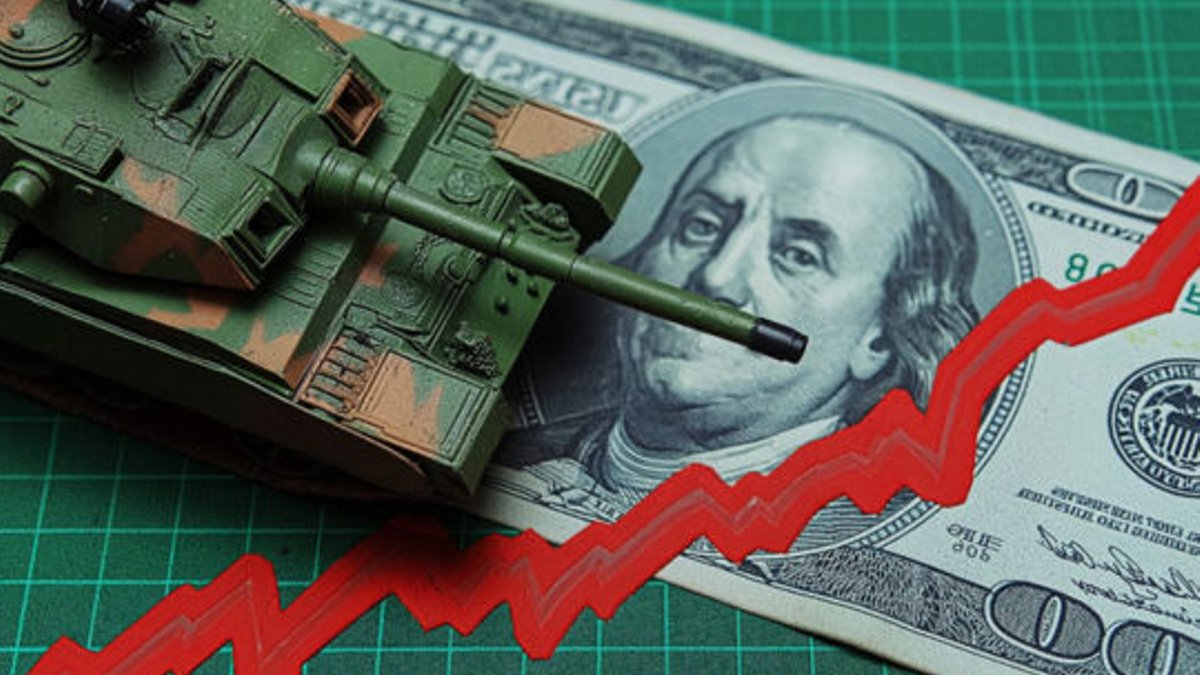
The conflict between the US, Israel, and Iran has exposed the far-reaching consequences of modern warfare, as disruptions in the Strait of Hormuz impact global shipping and economies worldwide. While wars are often justified by national security, territorial claims, or humanitarian causes, these reasons mask the reality that war is an activity with costs that are vastly underestimated. The true expenses extend far beyond the battlefield, affecting nations and markets in ways that are often overlooked.
Those who initiate war rarely bear the full costs, which tend to be displaced across borders, markets, and time. The price paid by the perpetrator reflects only a small fraction of the social cost. Beyond physical destruction, war generates massive negative externalities.
The Economic Cost of War
The current Iran conflict is a prime example. Direct US military spending may run into the tens or even hundreds of billions of dollars. However, the broader economic cost, transmitted through energy, food, and financial markets, runs far higher. The International Monetary Fund warns that the war is already diminishing many economies’ growth prospects.
The transmission mechanism is simple: when oil and gas prices rise, transportation and electricity become more expensive. When fertiliser costs increase, so do food prices. Central banks may respond by assuming a tighter monetary-policy stance, ultimately slowing growth.
Measuring the True Costs of War
Efforts to measure the true costs of war have consistently found that they lie beyond the battlefield. Joseph Stiglitz and Linda Bilmes tallied a catalogue of costs in the trillions of dollars once macroeconomic effects were included. Similarly, both the IMF and the World Bank have found that violent conflict depresses growth in economies far removed from it.
Under conservative assumptions, the US may bear only a modest share of the total global economic damage. As European Central Bank President Christine Lagarde recently cautioned, the rest is diffused across the system, absorbed by energy importers, emerging markets, and households worldwide.
Read Also: São Paulo, Mexico City power resilient Latin tech
The Mechanisms of War
Three mechanisms make it possible for the costs of war to be displaced. The first is spatial: modern economies are deeply interconnected, and when war disrupts one node, the effects cascade outward. The second mechanism is temporal: war typically requires the present to borrow from the future, with governments financing conflict through debt.
The third mechanism is distributive: war concentrates decision-making while dispersing the costs. Those who decide are not the ones who pay. This insight lies at the heart of modern conflict economics, as Paul Collier has shown that wars persist not because they are collectively rational, but because they are privately beneficial.
Edward Fishman argues in his book Chokepoints that power today flows through global systems such as energy routes, financial networks, and supply chains. But conflict turns these into channels for economic contagion, resulting in a peculiar inversion: war appears expensive in theory but affordable in practice, because much of the bill is paid by others.
The policy challenge is to discourage war by internalising its costs. Those who initiate conflict must bear a greater share of its true costs. Ensuring this outcome requires an effective global institution that can align the private and social costs of conflict more effectively than global markets can.
They are rarely borne by those who initiate conflict. The social cost of war reflects the full extent of its negative externalities, which can be massive.
But conflict turns these into channels for economic contagion. This is the reality of modern conflict.

São Paulo, Mexico City power resilient Latin tech


