Oil Surges 12 Percent on Renewed War Fears
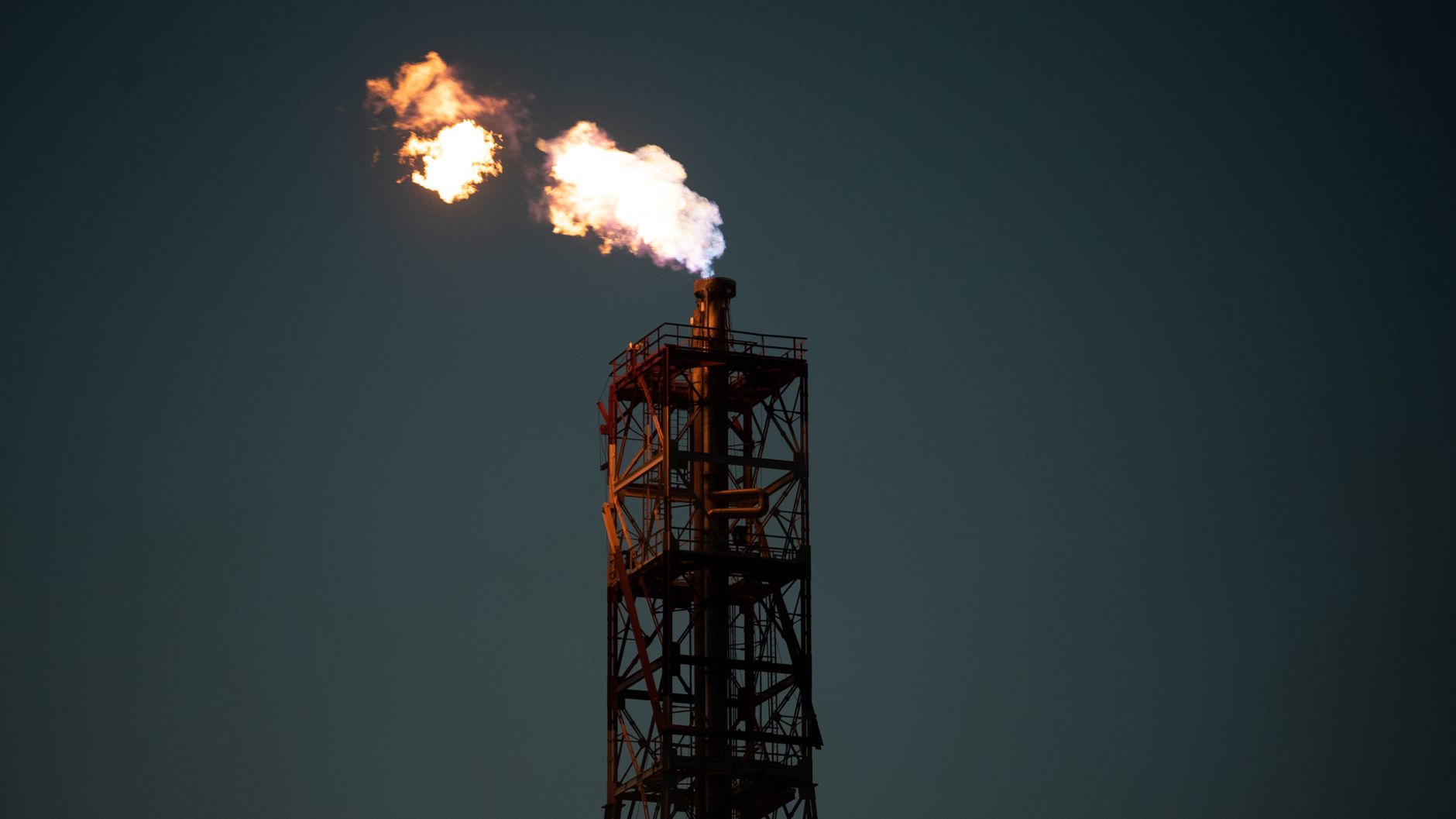
Oil prices have surged 12% since Friday, hitting a one-month high in Asian trade on Tuesday, as renewed hostilities between the United States and Iran drove a return to war-risk pricing. The U.S. decision to reinstate a blockade on Iranian oil exports ended weeks of relative calm in the market.
Brent crude futures approached $85 per barrel on Tuesday, while West Texas Intermediate crude attempted a breakout above $80. Brent was up 1.91% at $84.89 in Asian trade, and WTI gained 2.02% to $79.72 per barrel. Both benchmarks extended Monday’s surge, which was triggered by the weekend re-escalation and by President Donald Trump’s announcement that the United States would reinstate its blockade on Iran.
The jump represents a significant increase from Friday’s levels. Trade had been relatively stable since mid-June, when the U.S. and Iran signed a memorandum of understanding to negotiate a deal. That optimism has now vanished as the market realizes that recovery of traffic through the Strait of Hormuz won’t go smoothly.
Trump’s plan adds confusion. The oil market is further confused about what Trump referred to as a fee for the U.S. becoming “the Guardian of the Hormuz Strait” and “for any and all costs necessary to do the job of providing safety and security to this very volatile section of the World.” Analysts are unsure how this could work, or even if it’s serious.
ING’s commodities strategists Warren Patterson and Ewa Manthey wrote that Trump’s “idea” would mean that a fee on a supertanker carrying about 2 million barrels of crude at $80 per barrel would be equivalent to around $32 million, or an additional cost of $16 per barrel. They noted this is significantly higher than the $1/bbl toll for which Iran has been pushing.
Related: Cheap bongs for your use is always good
The market had been pricing in a gradual de-escalation after the June MOU, but the speed of the reversal caught many traders off guard. The move in three days suggests that investors are now betting on prolonged disruption rather than a quick resolution. That shift matters because the Strait of Hormuz handles about a fifth of the world’s oil supply, and any sustained blockage would ripple through global supply chains.
The oil market started this week with the crude awakening that any recovery of oil flows through the Strait of Hormuz will not be smooth sailing. The reinstated blockade, combined with Trump’s proposed fee, leaves traders with more questions than answers about how crude will move through the chokepoint in the coming weeks.
ING’s strategists noted that the fee on a single supertanker would dwarf Iran’s proposed toll, making it economically unworkable for many shippers. For now, the market is simply repricing risk upward, waiting to see if the White House follows through.
Oil flows are critical to the global economy. The Strait of Hormuz is a key oil demand route.

OPEC Reduces Oil Demand Forecast Again


